

A/B vs In-Place Firmware Updates: Trade-offs for Embedded Systems
August 03, 2026
4 min
The embedded systems industry is evolving rapidly, driven by the proliferation of IoT devices, edge AI, and automotive electronics. For engineers looking to stay competitive, continuous learning and professional certification have become essential career investments. Whether you are a recent graduate entering the field or a seasoned developer seeking to validate your expertise, understanding the landscape of certifications and learning resources can help you chart a clear path forward.
Unlike web development or data science, embedded systems engineering demands a unique blend of hardware knowledge, low-level programming skills, and real-time software design. Certifications provide a structured way to demonstrate these competencies to employers. They signal that you possess not just theoretical knowledge but also practical skills aligned with industry standards.
According to the IEEE Computer Society, the demand for qualified embedded software engineers continues to grow as industries integrate AI components into safety-critical systems. A recognized certification bridges the gap between academic knowledge and the rigorous demands of professional embedded development.
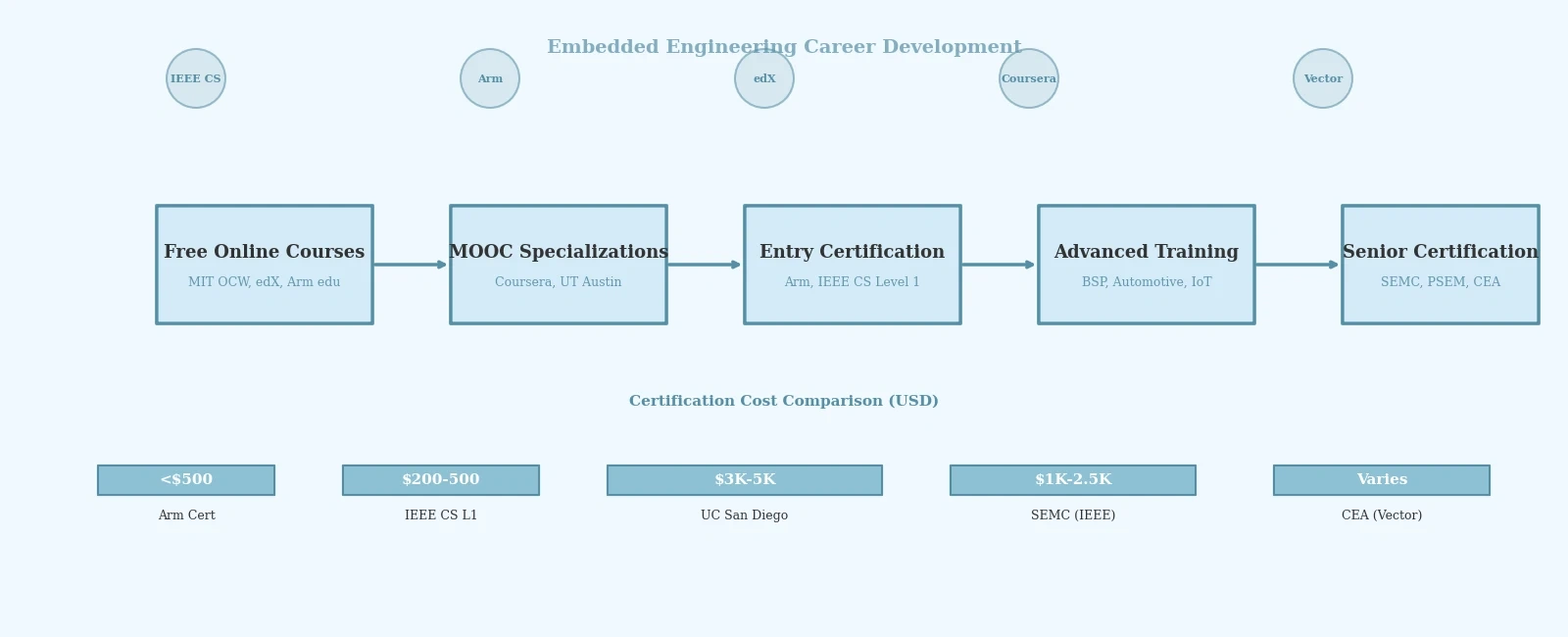
Launched in February 2026, the IEEE CS Software Professional Level 1 Certification establishes a consistent benchmark for foundational software engineering knowledge. The program covers 17 key areas including software requirements, design, construction, testing, configuration management, and security. There are no prerequisites — anyone can take the exam, making it accessible to both new graduates and experienced engineers from adjacent fields. The certification is particularly valuable because it is built on a globally recognized framework developed by industry and academic leaders under the IEEE Computer Society.
For senior-level professionals, the Software Engineering Master Certification (SEMC) offers advanced validation of expertise in software engineering leadership and specialization. It requires completion of 12 proficiency certificates plus advanced modules, and it opens doors to management and technical lead positions.
Arm-based processors power the vast majority of embedded devices worldwide, from microcontrollers in smart home gadgets to automotive ECUs. The Embedded Systems Essentials with Arm Professional Certificate, offered through Arm Education, provides foundational skills in embedded system design using Arm Cortex-M microcontrollers. The program covers embedded system components, real-time operating systems, serial communication, and hands-on prototyping using the Mbed simulator — all without requiring physical hardware. With a cost under $500 and a duration of 2–4 months, it is one of the most accessible and budget-friendly entry points into professional embedded certification.
For engineers targeting the automotive embedded software sector, the Vector Certified Embedded Associate program offers industry-recognized credentials focused on CAN, LIN, and Ethernet communication protocols, AUTOSAR architecture, and Vector’s development tools such as CANoe and CANalyzer. The CEA certification is particularly valued by automotive OEMs and tier-one suppliers, as it validates hands-on experience with the tools and methodologies used daily in vehicle ECU development.
The UC San Diego Embedded Systems professional certificate program offers hands-on training in embedded systems design, covering both hardware and software aspects. Aimed at mid-career professionals, the program provides practical experience with real-world embedded development scenarios and is well-regarded in the industry for its applied approach.
Several top universities offer free or affordable embedded systems courses online. UC Berkeley’s EECS 149 — Introduction to Embedded and Cyber-Physical Systems — is one of the most respected courses in the field. The course textbook, “Introduction to Embedded Systems: A Cyber-Physical Systems Approach” by Edward A. Lee and Sanjit Seshia, is available as a free PDF download and covers modeling, design, and analysis of embedded systems with a strong emphasis on the interplay between software and physical processes.
The University of Texas at Austin offers “Embedded Systems — Shape The World” through edX, a comprehensive course series covering microcontroller input/output, real-time operating systems, and embedded software development using ARM Cortex-M processors. The course includes hands-on lab exercises and is accessible to learners at various skill levels.
MIT OpenCourseWare provides free access to embedded systems course materials, including lecture notes, assignments, and labs from courses on embedded systems design and real-time computing. These resources are invaluable for self-directed learners who want to build a strong theoretical foundation.
Coursera’s Embedded Firmware Engineering Specialization, offered in collaboration with the University of Colorado Boulder, takes learners from embedded software fundamentals through advanced BSP development. The program covers GPIO configuration, timer management, UART communication, and Board Support Package architecture using Embedded C. Each course includes hands-on labs that simulate real-world development scenarios found in IoT devices, automotive ECUs, and industrial controls.
The Arm Education program on Coursera offers multiple pathways including “Embedded Systems on Arm: Get Practical with Hardware,” which provides hands-on experience with the ST Nucleo F401RE development board. These courses are designed to be accessible to beginners while still providing depth for intermediate learners.
Major semiconductor vendors offer extensive free training resources. Arm’s developer portal provides on-demand courses covering Cortex-M architecture, Armv8-M security extensions, and software development best practices. Texas Instruments offers training through its TI Precision Labs and embedded processing technical documentation, which cover everything from basic microcontroller programming to advanced power management techniques. Microchip and STMicroelectronics similarly provide application notes, reference designs, and online training modules for their product families.
For engineers starting their journey, a recommended path begins with foundational courses like the Arm Professional Certificate or UT Austin’s “Shape The World” series, followed by hands-on projects using affordable development boards such as the STM32 Nucleo or Raspberry Pi Pico. As skills develop, pursuing the IEEE CS Software Professional Certification provides formal validation of software engineering competencies. Engineers targeting specialized domains — automotive, aerospace, or IoT — should then pursue domain-specific certifications like the Vector CEA or vendor-specific training.
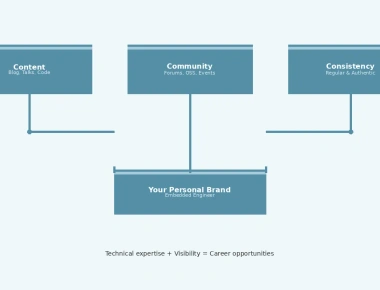
Regardless of the specific path, the key is consistent practice. Building real projects, contributing to open-source embedded firmware, and participating in communities such as the Embeddedrelated forums or the r/embedded subreddit accelerates learning far beyond what any single course can provide.
Quick Links
Legal Stuff